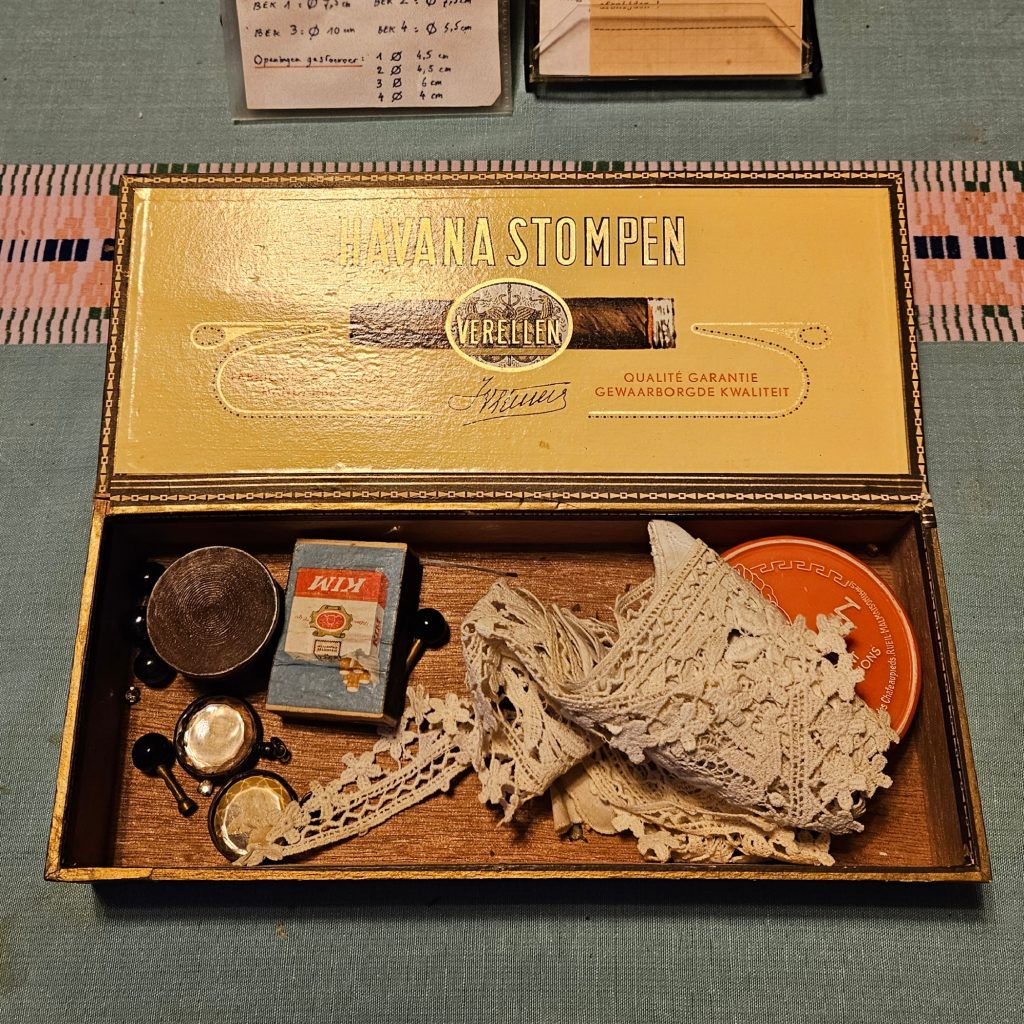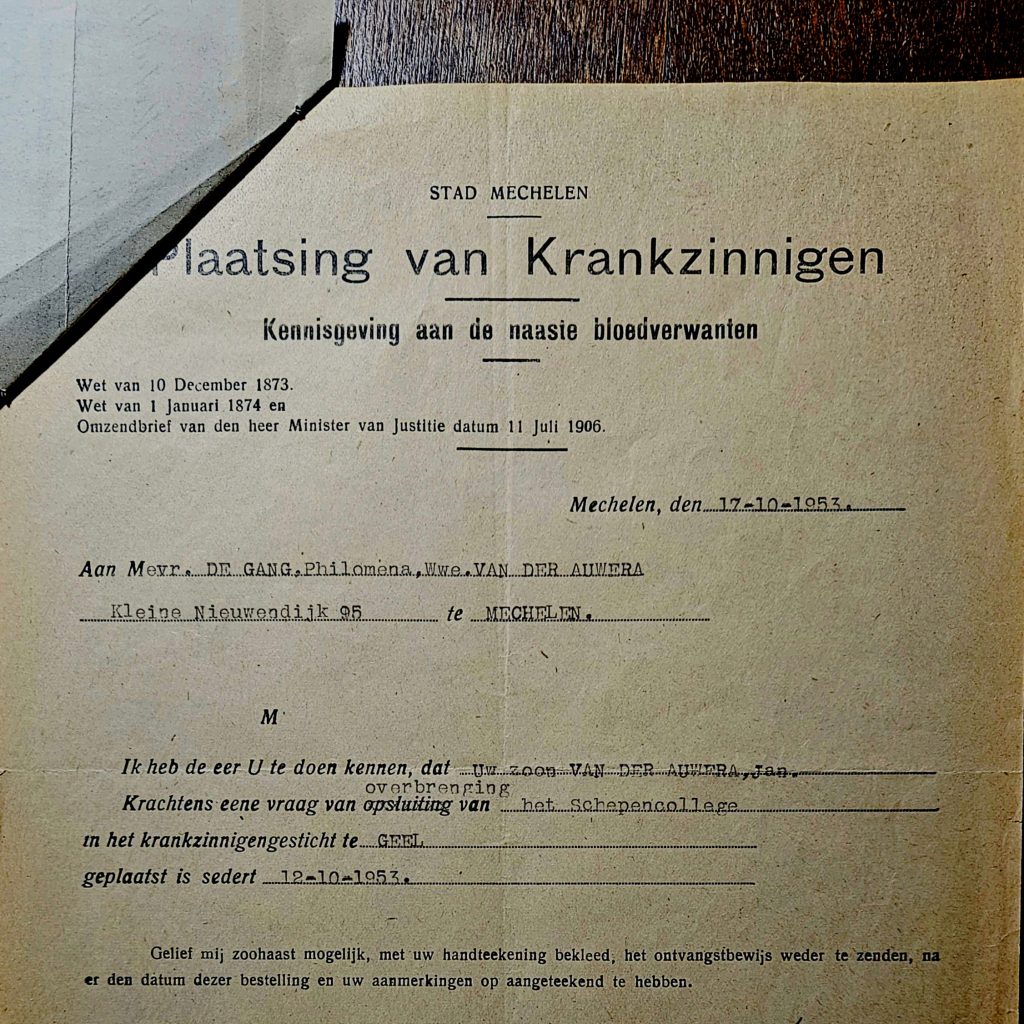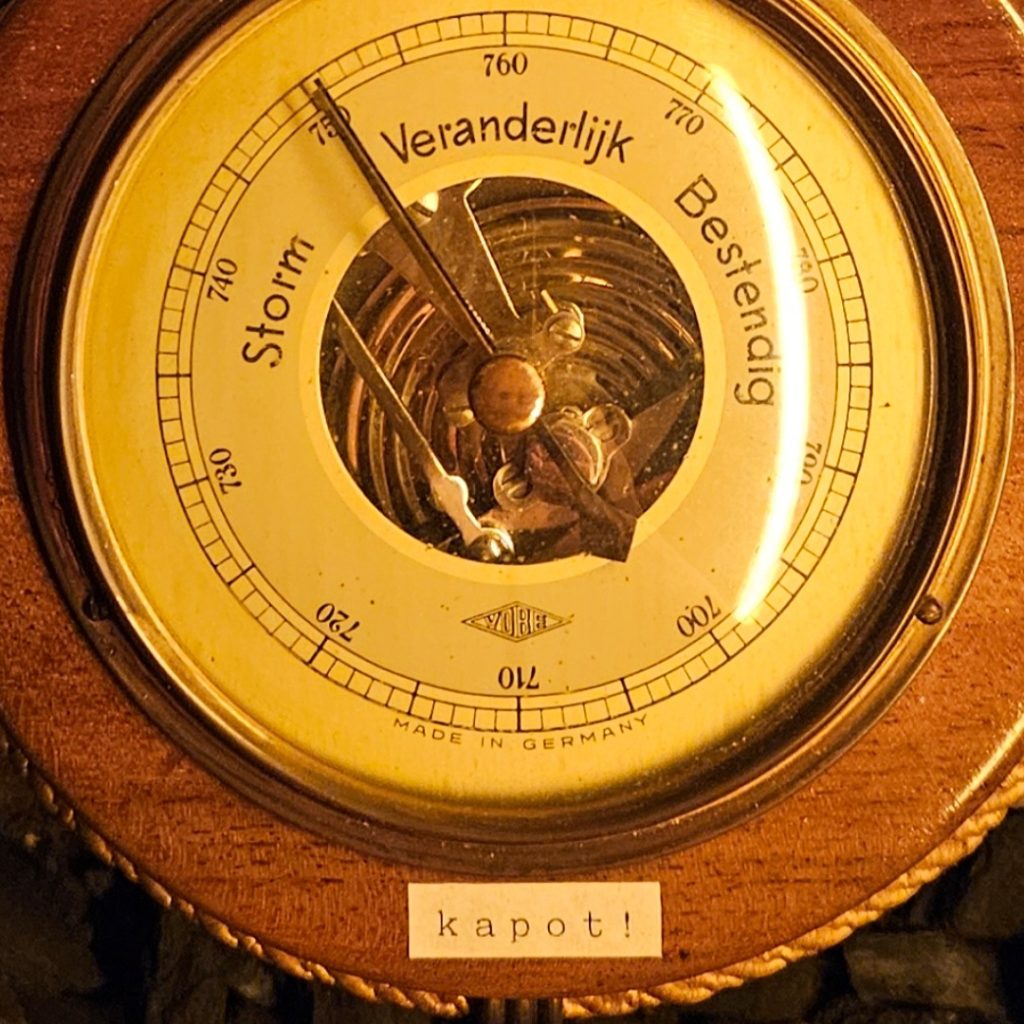
The Madness of the System – installation with display cases and a documentary.
Opening Friday 27 March 2026, 6 – 11pm / Part of BORGER 2026⠀⠀
on view also⠀⠀
Saturday 28 March 2026, 2 – 6pm⠀⠀
Sunday 29 March 2026, 2 – 6pm⠀⠀
and by appointment⠀⠀
The Arts Institute, Kattenberg 93 BoHo Antwerp
The Madness of the System – The Story
Episode 1 – prologue
This is the story of two men who, modest and vulnerable in their being, became — at a young age —unwillingly entangled in the madness of the system. They were distant relatives and met occasionally. Their stories unfolded separately and without direct connection, yet they are alike in the way both carried their trauma throughout their lives — silently, and with a quiet dignity.
The stories of these two men — let us call them Jean and Ronny — are only sparsely documented. Ronny was born in 1949 and lived his entire life in the city of Mechelen, in Belgium. As a teenager, he was full of humour, and a rebellious spirit at school. He grew up in what might be described as a middle-class family of socialist aristocrats with a refined culture. His letters to his sister — “Hello Brussels Baby”, “Hello My Dear Darling” — are filled with witty anecdotes and playful language, and reveal a keen interest in space science and world politics. Jean was born in 1932 and also spent his childhood in Mechelen. We have no records from his early life, apart from a few photographs. In one, taken when he was thirteen, he appears as an exemplary schoolboy, with a melancholic gaze. In another, a year later, he looks at us with bright eyes and a self-assured, almost artistic nonchalance, working in a sculpting studio at an unknown location.
Jean died in 1998, and Ronny in 2025. We cannot rely on personal testimonies; none exist. There are no recorded conversations, no written reflections — at least none related to the events that shaped their lives. We will never know what they thought, felt, feared, or hoped. We can only try to reconstruct their stories from fragments: documents, photographs, and artefacts found in Ronny’s house after his death.
Episode 2 – Ronny
Casablanca, Morocco. Summer, 1974. Ronny, then twenty-four, and a friend arrive at the first destination of what was meant to be a long journey. Young men on the road for the first time — alone, eager, in search of adventure. But at Nouasser International Airport, that journey abruptly descends into a nightmare, for Ronny. The friend turns out to be the wrong kind of friend. Afraid of being caught by border police, he hides the drugs he is carrying in Ronny’s backpack. The police find them. Ronny — shocked, uncomprehending — is arrested and imprisoned. The friend is released and disappears.
What followed remains largely unknown. Moroccan prison life at the time must have been harsh and brutal. With a speech impediment — he stuttered — and only limited knowledge of French and English, Ronny would have found it nearly impossible to communicate, let alone defend himself. He must have felt utterly isolated and desperate. At some point, he managed to contact his family. After weeks of uncertainty and attempts to secure his release, and with the assistance of the Belgian consulate, his sister travelled to Casablanca on 10 August 1974, accompanied by a friend, to seek contact with the authorities. When they left a week later, there were signs of hope — but Ronny would remain imprisoned for another five months. On 27 January 1975, he was issued a new passport, with a new photo, and placed on a flight home that same day.
We will never know how he processed the trauma of those months. Whether his family sought justice remains unclear. Ronny never pursued psychological support, nor did he ever speak or write about what had happened. Instead, he retreated into a quiet life in his parents’ home. He had friends, but never a romantic relationship. A second shock came in 1987, with the sudden death of his father. Without prior signs of illness, his father collapsed and died of a heart attack at home.
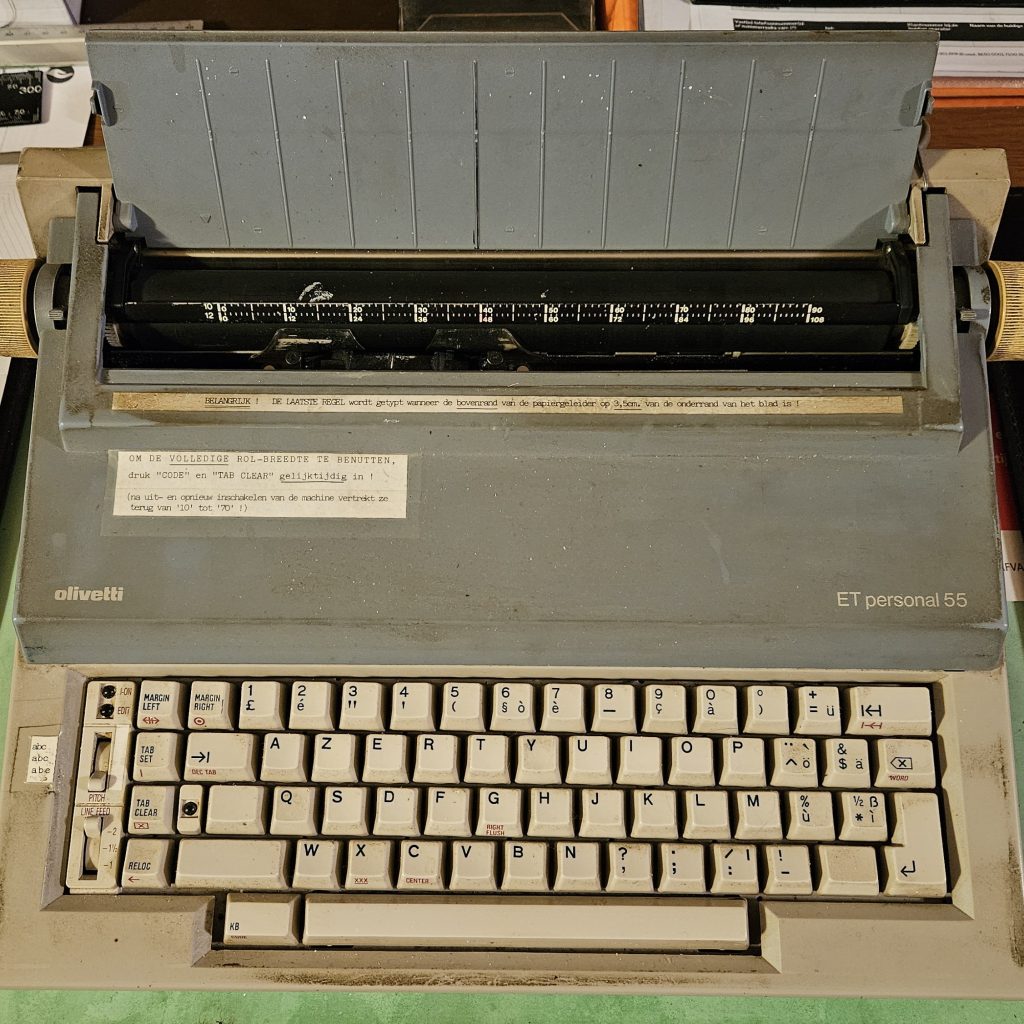
Ronny continued living with his mother. They cooked together, travelled together — they lived, quietly. When his mother died twenty years later, at the age of ninety-five, Ronny gradually transformed the house into his safe space, and this is how we found it after his death. What he created there is remarkable: a house filled with books and artworks collected by his parents, complemented by his own installations — assemblages of objects, photographs, and handwritten and typed-out notes to himself. The whole setting breathed an ambivalent atmosphere of humour and despair — a space that felt like a stage for a life of unconscious self-reflection.
Episode 3 – intermezzo
Ronny was, in his own way, an artist, and so was Jean. Ronny trained as a graphic designer, taught himself photography and built his own home photo lab. Jean worked as a sculptor, in the most literal sense: a stone cutter. They had no ambition to act as artists, call their work art or show their creations in public. It was what gave them a sense of meaning and what they liked to do, in their own silent way. Ronny left behind a carefully archived body of graphic and photographic work, preserved in the house where he lived until his death. Of Jean’s work, nothing remains.
Episode 4 – Jean
What happened the 16th of October 1951? Jean, then nineteen, was spending time with a group of friends. But these were not true friends. They mocked his appearance, his manner, his fragility. We have reason to believe Jean may have been gay, or at least uncertain about his sexual identity. In 1951, in Flanders, such ambiguity was not tolerated, particularly in the conservative Catholic countryside. That day, Jean was pressured into a sexual situation involving a younger boy. According to his own account and that of some witnesses, nothing occurred beyond limited physical contact. Yet, while the situation undeniably affected the younger boy, the response to it would define Jean’s entire life. The boy’s parents contacted the police. Jean was formally accused of “indecent behaviour in a public place” and “sexual harassment.”
We do not know how the legal proceedings unfolded. What we do know is the outcome: Jean was labelled a dangerous criminal and imprisoned in Mechelen. Shortly thereafter, he was declared mentally ill and transferred to the closed psychiatric institution of Rekem, in northeastern Belgium.
At that time, Rekem was a harsh, brutal, and unforgiving place. Psychiatric patients, vagrants, beggars, and so-called social outcasts were all confined together. Anyone who didn’t fit into society ended up there. Life followed a rigid, almost military routine, marked by forced labour and constant supervision. Patients were treated as prisoners — and subjected to crude and often violent forms of psychiatric intervention. Jean underwent repeated electroshock treatments, intended to “correct” both his mental condition and his supposed sexual deviance . These treatments left him physically and psychologically broken. His situation appeared hopeless.
Two years in hell would pass. Then a lawyer succeeded in having his case reconsidered. It was concluded that Rekem was not an appropriate place for him. Yet rather than being guided toward recovery and returned to his family, Jean was transferred to the State Colony for Family Care in Geel. This institution represented a different and unique approach: a system of foster care in which individuals with mental vulnerabilities were placed within local families. From the few testimonies that remain, we know Jean lived a quiet life there — working on farms, helping with small tasks in the community. Officially, he remained classified as a “dangerous sexual delinquent.” Locally, however, this label was unknown. He formed social connections but never entered a romantic relationship.
Forty-five years passed. Jean never spoke again of that day in October 1951 — the moment that set the course for the rest of his life. He died on 27 February 1998 and was buried in Geel. No trace of his grave remains.
Episode 5 – Epilogue
These two stories of personal trauma may seem small against the vast backdrop of the horrors of global conflict and social misery. And yet, they reveal something essential about what it means to be human. They are emblematic of how the vulnerability of our fundamental connectedness can be distorted, misunderstood, and ultimately suppressed. The madness did not reside in Ronny or Jean. It resided in the system that confined them, that redirected their fragile lives into the blind alleys of society, and that silenced their attempts to be seen, heard, and understood.
Their memory endures.